
The Hidden Cost of Cancer Care: How Financial Stress Affects Recovery
Kovalik V, Sardi A, Falla-Zuniga LF, Wasti A, King MC, Iugai S, Uzhegova K, Nieroda C, Montes TD, Gushchin V. Patient-Reported Financial Toxicity of Cytoreductive Surgery and Hyperthermic Intraperitoneal Chemotherapy. Ann Surg Oncol. 2026 Mar 2. doi: 10.1245/s10434-025-19059-x. Epub ahead of print. PMID: 41772250.
What was this study about?
This study looked at the financial challenges (often called “financial toxicity”) experienced by people undergoing cytoreductive surgery with HIPEC (CRS/HIPEC)—a treatment used for some abdominal cancers. Researchers wanted to understand how financial stress affects patients’ quality of life before and after treatment.
Why does this matter?
Cancer treatment can be physically and emotionally demanding—but it can also be financially stressful. Costs like medical bills, co-pays, and lost income can add up quickly. This study helps highlight how those financial pressures impact patients’ overall well-being.
What did the researchers do?
Surveyed 248 patients who were either preparing for CRS/HIPEC or had already undergone the procedure
Measured:
Financial stress using a validated questionnaire
Quality of life using a standard cancer-related survey
Looked at how financial stress changed over time and what factors increased risk
Key findings
1. Financial stress is common
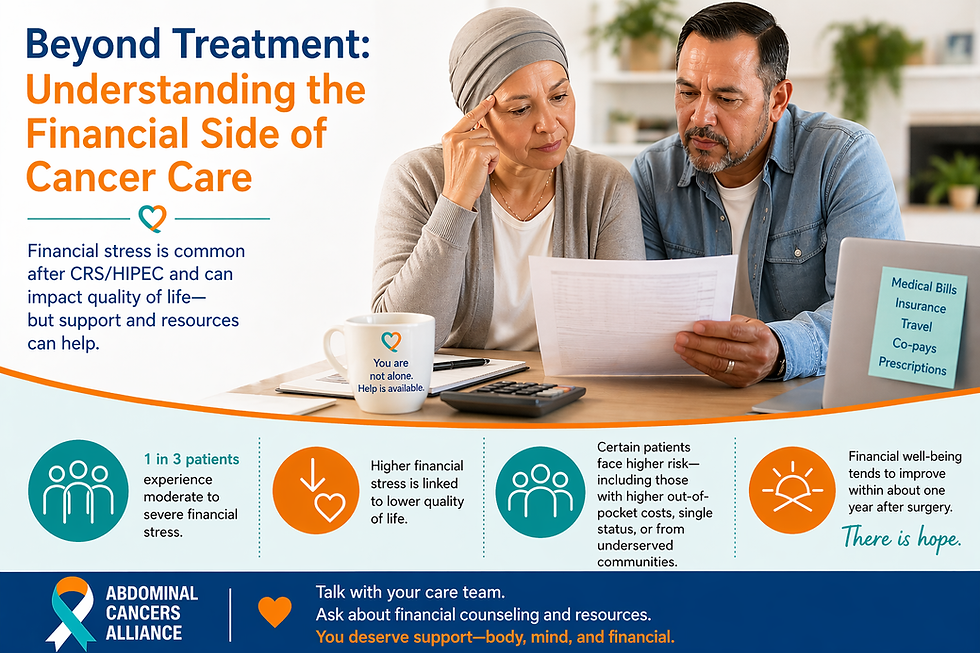
About 1 in 3 patients reported moderate to severe financial burden.
2. Financial stress is linked to quality of life
Patients with higher financial stress reported worse overall well-being.
3. Certain groups were at higher riskFinancial challenges were more likely in patients who:
Received chemotherapy before or after surgery
Had higher out-of-pocket costs (like co-pays)
Were single
Came from historically underserved or minority communities
4. Financial stress improves over time
Encouragingly, financial well-being tended to improve within about one year after surgery.
What does this mean for patients?
Financial stress is a real and important part of the cancer experience, not just a side issue.
It can directly affect how patients feel physically and emotionally.
Some patients may face higher risk, especially depending on treatment type and personal circumstances.
There is hope—financial strain may ease over time, especially after the first year.
What can patients and caregivers do?
Talk openly with your care team about costs and concerns
Ask about financial counseling or support programs
Explore assistance resources early (insurance navigation, grants, advocacy groups)
Remember: addressing financial health is part of overall cancer care
Bottom line
This study shows that financial burden is closely tied to quality of life for people undergoing CRS/HIPEC—but it also highlights opportunities to better support patients during and after treatment.


