
Heating Up Hope: HIPEC and the Future of Ovarian Cancer Care
Somashekhar, S.P. HIPEC in Advanced Ovarian Cancer: From Controversy to Contextual Standard of Care. Indian J Gynecol Oncolog 24, 52 (2026). https://doi.org/10.1007/s40944-026-01122-4
What is this study about?
This article looks at a treatment approach called HIPEC (hyperthermic intraperitoneal chemotherapy) for people with advanced ovarian cancer—a cancer that often spreads within the abdomen.
Even with surgery and chemotherapy, many patients still have tiny cancer cells left behind that can lead to the cancer coming back. This study discusses whether HIPEC can help address that problem.
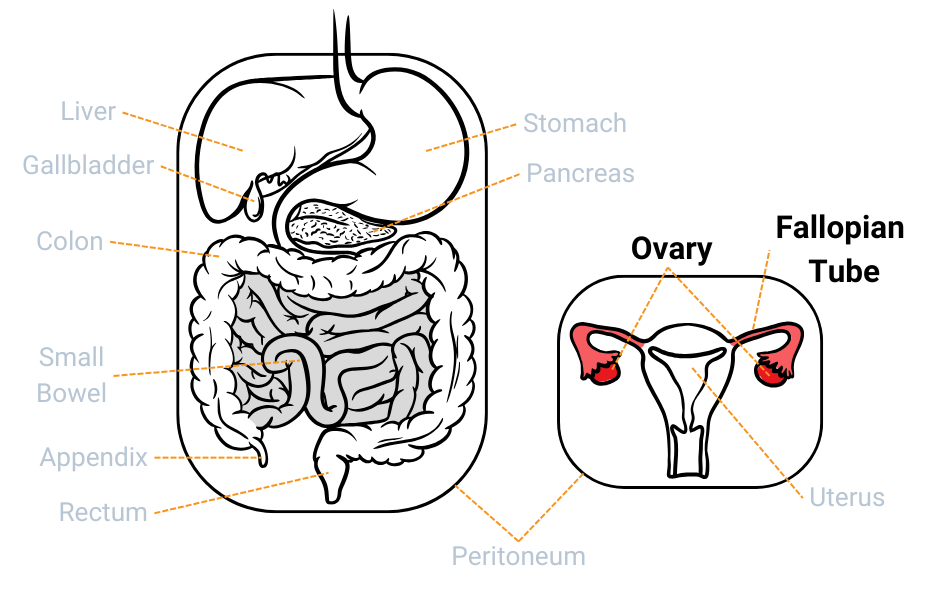
What is HIPEC?
HIPEC is a special type of chemotherapy given during surgery:
After surgeons remove as much visible cancer as possible
Warm chemotherapy is delivered directly into the abdomen
The heat helps the medicine work better and reach cancer cells more effectively
Because it’s given directly where the cancer is, higher doses can be used while limiting effects on the rest of the body.
Why is this important?
Ovarian cancer often spreads across the lining of the abdomen. Even when surgery removes all visible tumors, microscopic cancer cells can remain.
Traditional IV chemotherapy may not reach these tiny deposits very well. HIPEC is designed to:
Kill remaining cancer cells
Improve how deeply chemotherapy penetrates tissues
Potentially reduce the chance of cancer coming back
What did the research find?
Earlier concerns about HIPEC focused on safety and lack of strong evidence
A key clinical trial (OVHIPEC-1) showed that adding HIPEC during surgery improved outcomes for some patients
The field has shifted from skepticism toward more selective use of HIPEC in appropriate patients
What does this mean for patients?
This research suggests that:
HIPEC may be a helpful option for some people with advanced ovarian cancer, especially during certain types of surgery
It is not right for everyone—treatment decisions depend on many factors, including overall health and how much cancer can be removed
More research is ongoing to better understand who benefits most
What are the key takeaways?
Advanced ovarian cancer is difficult to treat because it often spreads widely in the abdomen
HIPEC is a promising approach that targets cancer more directly during surgery
Evidence is growing, but it’s still important to individualize treatment decisions
Questions patients may want to ask their care team
Am I a candidate for HIPEC?
What are the potential benefits and risks in my situation?
Is this treatment available at my treatment center?
Are there clinical trials I should consider?


